The fall-guy strategy
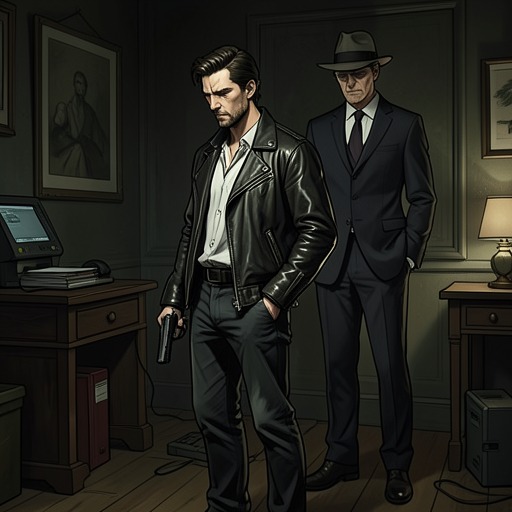
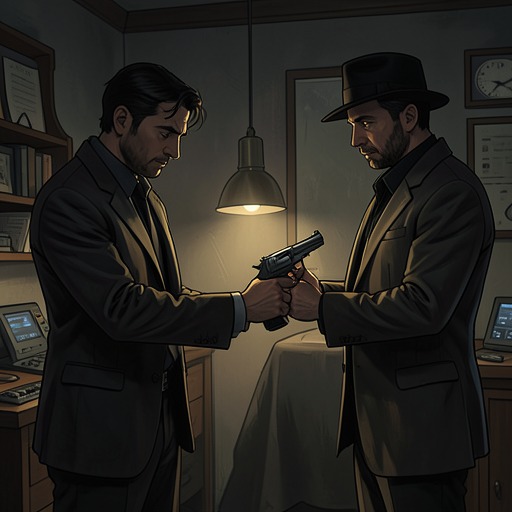
The Maltese FalconThe fall-guy strategy is Sam Spade’s plan to direct the police toward one culprit for multiple killings rather than let their investigation expose the falcon and draw the entire criminal enterprise into view. Spade presents the plan as both a way to manage law enforcement and a condition of doing business in his own city: without a victim to hand over, he believes, his past evasions will finally become impossible to sustain. Its proposed target is Wilmer Cook, whom Spade identifies as a shooter and a convenient suspect; its price is a negotiated exchange of money, custody, and carefully controlled information.
Definition and Purpose
Spade introduces the strategy in a negotiation with Casper Gutman, Joel Cairo, and Brigid O’Shaughnessy. Though Spade already has the falcon, he insists that another matter must be settled first: the police need a victim on whom they can place responsibility for the three murders under discussion. Cairo immediately disputes that number, arguing that there have been only two and that Floyd Thursby must have killed Spade’s partner. The disagreement reveals a central purpose of the plan: it is not merely a proposal for an arrest but an attempt to establish who gets to define the crimes and what account of them the police will receive.
For Spade, the fall guy is the answer to an approaching reckoning. He says he is not afraid of the police and knows how to handle them, but insists that his freedom to operate depends on eventually producing a criminal when the authorities demand one. He has repeatedly defied the law, he explains, because he has not forgotten that a day will come when he must walk into headquarters with a culprit in front of him. His blunt formulation turns the strategy into a personal professional rule: evasion is tolerable only while he can deliver someone the authorities can charge.
Police Pressure and Spade’s Calculation
Spade’s plan rests on his reading of police behavior. He believes the investigators are not asleep but lying low, aware that he is deeply involved and waiting to see what he does next. A fall guy, in his account, gives them a stopping point: without one, they may eventually uncover information about the falcon, forcing Gutman and his associates to flee with it and disrupting their chance to make money. With one, Spade argues, the police are likely to stop investigating the wider affair.
The strategy extends a pattern already visible in Spade’s dealings with the authorities. When Lieutenant Dundy presses him for the client’s identity, Spade refuses to disclose it before speaking with the client, even after Dundy threatens that he will either tell the police or testify in court. In another confrontation, Spade invites the police to search his rooms but insists on a warrant. These encounters show the procedural line he tries to hold: he resists informal pressure and protects his client’s information, while anticipating that he must eventually give the authorities something they can use. The fall-guy plan converts that defensive posture into a managed handover.
Spade also offers a political calculation about prosecution. He expects District Attorney Bryan to care more about the appearance and likelihood of a successful case than about pursuing every guilty participant. A doubtful prosecution, Spade says, is less attractive than a case that can produce a conviction; and trying several accomplices at once could muddle the evidence. He plans to present Bryan with a choice between a tangled case involving everyone and a simpler prosecution focused on Wilmer. In Spade’s view, the prosecutor will prefer the latter and will be willing to disregard information about the falcon as an attempt to confuse the case. This prediction is part of Spade’s method, not an established outcome: he is explaining why he believes the proposed scapegoat will satisfy the authorities.
Wilmer as the Proposed Culprit
Spade points to Wilmer, standing in the doorway, as the person to whom the necessary evidence should be attached. He says Wilmer actually shot Thursby and Captain Jacobi and is made to order for the role. Gutman’s reaction is complicated by his professed attachment to Wilmer, whom he says he could not feel differently about even if the boy were his own flesh and blood. The proposal thus asks Gutman to sacrifice a valued associate in exchange for protecting the larger enterprise.
Spade does not consider the surrender of Wilmer by itself sufficient. He demands the circumstances of the shootings—why Wilmer shot Thursby, and why, where, and how he shot Jacobi—because a suspect is not a reliable fall guy unless the evidence can make the case stick. Gutman points to the pistols on the table and argues that the bullets that killed the two men were fired from those weapons, a fact police experts could establish. Spade replies that the matter is more complicated: he needs to know what happened so that the details that do not fit can be covered up. The plan therefore depends not only on naming a culprit but on assembling a coherent account that can withstand investigation.
The agreement takes shape as a trade. Gutman proposes that Spade receive ten thousand dollars and Wilmer in exchange for the falcon, with an hour or two of grace so the others can leave San Francisco before Wilmer is questioned by Bryan. Spade accepts the need for an exchange but rejects the idea that Wilmer can be handed over with gaps in the story. He says that a fall guy who still has an opening to escape responsibility is no fall guy at all. When Gutman claims ten thousand dollars is every cent he can raise, Spade says he ought to receive twenty thousand; the difference shows that the bargain remains contested even after the basic proposal is on the table.
Limits and Significance
The strategy is built on a tension between Spade’s independence and his dependence on institutions. He refuses to let Dundy dictate what he discloses, and he resists the assumption that the police can simply compel him without proper process. Yet he also knows that his work and reputation exist within a city where police and prosecutors can eventually make his conduct costly. He describes the plan as necessary not just to escape the current investigation but to remain able to work in San Francisco: Gutman and the others can leave for New York or Constantinople, while Spade must continue to do business at home.
The plan’s moral and practical categories do not align neatly. Wilmer is proposed as a scapegoat, but Spade claims that he really did shoot Thursby and Jacobi; the fiction he intends to manage is therefore not simply the identity of the shooter, but the complete account, the selection of evidence, and the boundary of the prosecution. At the same time, Spade’s insistence on obtaining the facts suggests that the proposed sacrifice must be operationally credible, not merely convenient. The fall-guy strategy is consequently both a maneuver against police scrutiny and a compact among criminals, founded on selective disclosure: give the authorities a culprit convincing enough to close the case, while keeping the falcon and the wider enterprise beyond their grasp.